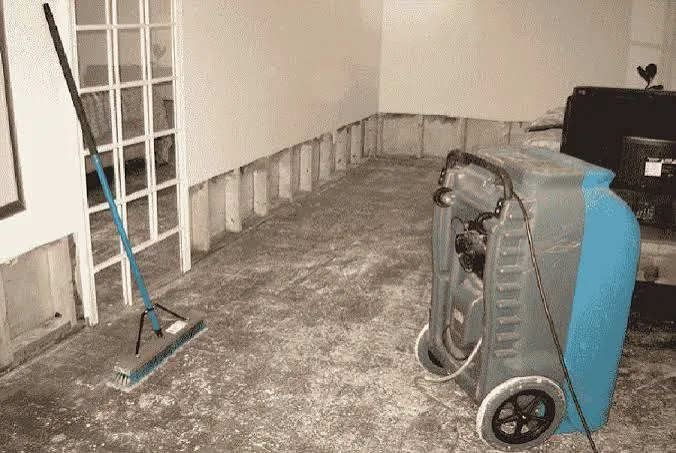
Water damage is often thought of purely as a property issue — damaged drywall, warped flooring, ruined belongings. But water left untreated creates conditions that can genuinely affect the health of everyone in the home, not just the structure itself.
The connection is straightforward: mold and bacteria need moisture to grow, and a wet home provides it in exactly the places people live, sleep, and breathe. In Mesa, the risk is easy to underestimate, because the desert air outside is dry — but the inside of a wet wall cavity or a soaked carpet pad stays warm and damp for days, and that is all mold needs. This guide explains how the health risks develop, why Mesa homes are not exempt, what to watch for, and what thorough professional drying actually protects.
Mold Growth Begins Fast
Mold spores are present in nearly every environment and only need moisture, warmth, and an organic food source (like drywall or wood) to begin growing — conditions that can be met within 24 to 48 hours after water damage. Once established, mold releases spores into the air that can be inhaled throughout the home, not just in the room where the water damage occurred.
Who's Most at Risk
- Individuals with asthma or existing respiratory conditions
- People with mold allergies or sensitivities
- Young children and elderly household members
- Anyone with a compromised immune system
Common symptoms associated with mold exposure include coughing, throat irritation, nasal congestion, eye irritation, and in some sensitive individuals, more significant respiratory symptoms.
Bacterial Growth in Contaminated Water
Gray and black water losses (see our guide to water damage categories) carry bacteria and other pathogens directly. Sewage backups in particular pose an immediate health risk and should never be cleaned up without proper protective equipment.
Hidden Moisture Is the Real Risk
The most dangerous water damage is often the kind you can't see — moisture trapped inside a wall cavity, under flooring, or in an attic. Because there's no visible sign prompting action, these areas can develop significant mold growth over weeks or months, quietly affecting indoor air quality the entire time.
Why Fast, Thorough Drying Matters More Than It Might Seem
This is exactly why professional restoration focuses so heavily on complete drying, not just visible cleanup. Drying a structure to the IICRC standard — confirmed with moisture meters, not just a visual check — is what actually prevents the health risks associated with hidden mold and bacterial growth, rather than just addressing what's visible on the surface.
If You Suspect a Health Impact
If you or a family member are experiencing symptoms that seem connected to a water damage event in your home, consult a healthcare provider in addition to addressing the physical moisture issue. Restoration and medical care solve different parts of the same problem.
How Mold Gets Started in a Mesa Home
Mold does not need much. Its spores are present in nearly every environment, and all they require is moisture, warmth, and an organic food source — and drywall, wood framing, and carpet are all food. Once water soaks into those materials, growth can begin within 24 to 48 hours, long before anything is visible on the surface. In Mesa, the warmth part is rarely in doubt: the inside of a wet wall cavity or a soaked carpet pad stays warm for days, even while the air outside feels dry.
Once established, mold releases spores into the air, and air moves. Spores from a wet laundry room or a damp wall cavity do not stay in that room — they travel through the home on air currents and through heating and cooling systems, so people can be exposed in bedrooms and living areas far from where the water damage happened. That is why a small leak in one corner of a house can become a whole-home air quality problem, and why the absence of visible mold in the room where you spend most of your time does not mean there is no exposure.
Why Mesa's Climate Raises the Stakes
Mesa's desert climate makes water damage easy to dismiss — the sun is strong, the air feels dry, and a wet patch on the floor seems like it should dry out on its own. The problem is that the places water hides are not exposed to that dry air at all. A slab leak under a concrete floor can keep the slab and the flooring above it damp for weeks before anyone notices a warm patch or a climbing water bill. A slow swamp cooler leak can saturate the insulation and framing inside a ceiling while the room below looks fine. And monsoon season, from June through September, brings the one thing the desert usually lacks — sustained humidity — right when roofs, gutters, and grading are being tested by heavy downpours.
The other Mesa factor is how homes are lived in. Air conditioning runs for much of the year, windows stay shut, and indoor air is recirculated — which is comfortable, but it also means that once mold spores or musty air are inside, they keep circulating rather than clearing out. A burst pipe during a cold snap can add hundreds of gallons in a very short time, and if it happens while a family is away for the weekend, the water has hours to soak in before anyone knows. None of this makes Mesa homes more fragile than homes elsewhere; it makes the damage harder to notice, and the window for easy drying shorter than it looks.
Gray and Black Water: A Different Level of Risk
Not all water carries the same health risk, which is why restoration companies classify every loss under the IICRC S500 standard. Clean water — from a supply line or water heater — is the least hazardous, though it still grows mold if it is left to sit. Gray water, from a washing machine overflow, dishwasher discharge, or toilet overflow, contains a significant degree of contamination and can cause discomfort or illness if ingested. Black water is the most serious category: sewage backups and flooding from outside carry bacteria and other pathogens directly, and the risk is immediate rather than something that develops over days.
That is why sewage backups should never be cleaned up without proper protective equipment, and why black water jobs cost more — typically $7–$10 per square foot, compared with $3–$4 for clean water and $4–$7 for gray water. Contaminated materials must be contained and disposed of properly, not dried and reused, and the affected area needs professional cleaning and drying before it is safe to use again. If you are facing a sewage backup or floodwater in your home, keep people and pets out of the affected area and call (480) 806-2186 — we answer 24/7 and aim for a response time of around 40 minutes in Mesa.
Warning Signs Your Home's Air May Be Affected
The most useful warning sign is also the simplest: a musty smell that does not go away. A smell that lingers after a room looks dry usually means moisture is still trapped somewhere — inside a wall cavity, under flooring, or in an attic — and mold is growing where you cannot see it. Other signs include discoloration or staining on walls and ceilings, paint or wallpaper that bubbles or peels, flooring that feels soft or warped, and dampness that returns after a day or two of fans.
Pay attention to people as well as the house. The symptoms associated with mold exposure include coughing, throat irritation, nasal congestion, and eye irritation, and in some sensitive individuals, more significant respiratory symptoms. If symptoms seem worse at home and ease when you spend time away from the house, or if they started after a known water event, that is worth mentioning to a healthcare provider — and it is a strong reason to get the moisture checked with meters rather than relying on a visual look. The affected area can develop significant mold growth over weeks or months with no visible sign at all, quietly affecting indoor air quality the entire time.
What Professional Drying Does for Your Health
Professional restoration focuses so heavily on complete drying because drying is what actually removes the conditions mold and bacteria need — not just the visible water. Our 5-step IICRC S500 process is: call and triage, inspect, extract, dry, and restore. The inspection classifies the water category and maps moisture with meters and thermal imaging, including inside walls and under flooring, so nothing is guessed at. Standing water is extracted immediately, and materials that cannot be saved are removed rather than dried in place.
Then structural drying begins, with air movers and dehumidifiers running continuously and a technician returning daily to take moisture readings. Most Mesa jobs reach the IICRC dry standard within 3 to 5 days, and the equipment stays in place until every reading confirms the structure is fully dry — judged by numbers, not by appearance. Where mold has already developed, remediation is a separate service with its own containment and cleaning steps, and our mold testing guide explains when testing makes sense after water damage. The result is not just a dry-looking room, but a documented drying log that proves the moisture is gone — and with it, the conditions that were putting your household's health at risk.
Protecting the Most Vulnerable People in Your Home
Some people in a household face more risk from the same exposure, and they deserve extra care while water damage is being dealt with. Young children and elderly household members, people with asthma or existing respiratory conditions, people with mold allergies or sensitivities, and anyone with a compromised immune system are all more likely to be affected by mold spores and contaminated water. If anyone in your home falls into one of these groups, keep them out of the affected rooms entirely until the area has been properly dried — do not let them help with cleanup, and do not let them sleep in a room that smells musty or still feels damp.
The same caution applies to pets, which spend their time closer to the floor where moisture and spores settle. And if anyone in the household is experiencing symptoms that seem connected to a water damage event, consult a healthcare provider in addition to addressing the physical moisture issue. Restoration can fix the house; only medical care can assess the person. Our part is to make the house safe again as quickly as possible — we answer 24/7, and every job starts with a free inspection and a written quote, so there is no reason to wait and see whether the problem sorts itself out.
Dealing with water damage right now in Mesa?
Call (480) 806-2186 for a free inspectionRelated reading
Health Risks of Untreated Water Damage at a Glance
Frequently Asked Questions
How quickly can mold grow after water damage?
Mold can begin growing within 24 to 48 hours after materials get wet, given moisture, warmth, and an organic food source like drywall or wood. In Mesa, the inside of a wet wall cavity or a soaked carpet pad stays warm for days, so growth can start quickly even though the air outside feels dry. That is why fast, thorough drying matters far more than it might seem.
What are the symptoms of mold exposure?
Common symptoms associated with mold exposure include coughing, throat irritation, nasal congestion, and eye irritation, and in some sensitive individuals, more significant respiratory symptoms. People with asthma or existing respiratory conditions, mold allergies or sensitivities, young children, elderly household members, and anyone with a compromised immune system are most at risk. If symptoms seem connected to a water damage event, consult a healthcare provider.
Is it safe to stay in a house with untreated water damage?
It depends on the water category and how long it has been there. A small, clean-water spill that is drying out is very different from a sewage backup or floodwater, which carry bacteria and pathogens and should never be cleaned up without proper protective equipment. Keep vulnerable people — children, elderly household members, and anyone with asthma, allergies, or a compromised immune system — out of affected rooms until the area has been properly dried, and call (480) 806-2186 for a free inspection if you are unsure.
Can mold grow if I cannot see any water damage?
Yes — hidden moisture is the real risk. Moisture trapped inside a wall cavity, under flooring, or in an attic can develop significant mold growth over weeks or months with no visible sign, quietly affecting indoor air quality the entire time. A musty smell that does not go away is often the first clue. Professional inspection maps moisture with meters and thermal imaging, so hidden wet areas are found rather than guessed at.
How does professional drying protect my family's health?
Professional drying removes the moisture that mold and bacteria need to grow, and it is verified with moisture meters rather than a visual check. Our 5-step IICRC S500 process — call and triage, inspect, extract, dry, and restore — includes daily moisture readings until every reading confirms the structure has reached the IICRC dry standard, which most Mesa jobs reach within 3 to 5 days. Where mold has already developed, remediation is a separate service with its own containment and cleaning steps.
Should I get mold testing after water damage?
Testing is a useful tool in specific situations, but it is not always the right first step — visible mold or a known water intrusion often needs remediation first, and drying the structure is the priority either way. Our guide on mold testing after water damage explains when testing makes sense, what the different types of testing can and cannot tell you, and what to do with the results.