One of the most common questions we hear from Mesa homeowners is simply: how long is this going to take? While every job is different, most water damage restoration jobs follow a predictable timeline. Here's what to expect, day by day.
Day 1: Inspection & Extraction
The first visit includes a full inspection — classifying the water category, mapping moisture with meters and thermal imaging, and removing any standing water immediately. If materials like soaked carpet padding can't be saved, they're removed on this visit too.
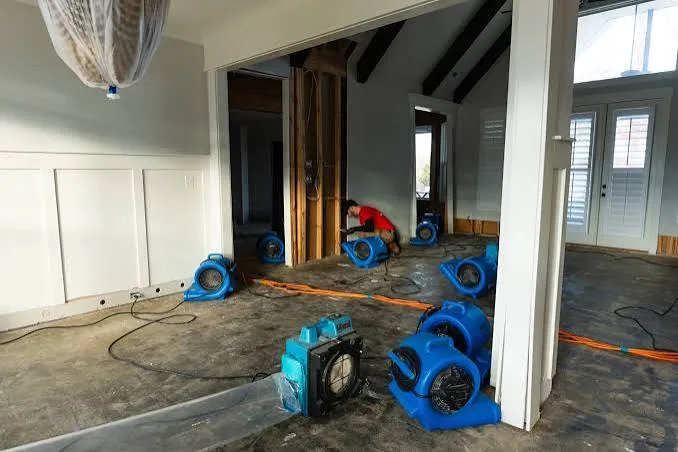
Days 1–4: Structural Drying
This is usually the longest phase. Air movers and dehumidifiers run continuously, and a technician returns daily to take moisture readings. Most Mesa jobs reach the IICRC dry standard within 3 to 5 days, though larger or more saturated areas can take longer. Equipment stays in place until every reading confirms the structure is fully dry — closing up a still-damp wall is one of the most common causes of mold showing up later.
Day 4–5: Final Drying Verification
Once readings are consistent with dry, unaffected reference points in your home, equipment is removed and the space is ready for reconstruction.
Days 5 Onward: Reconstruction
This phase varies the most in length depending on scope. A simple drywall patch and paint job might take a single day. A full-room reconstruction involving flooring, cabinetry, and paint can take one to three weeks, especially if materials need to be special-ordered to match your existing home.
Factors That Can Extend the Timeline
- Larger square footage requiring more drying time
- Category 2 or 3 water requiring additional containment and disposal
- Hard-to-match materials (specialty tile, hardwood, or cabinetry)
- Insurance claim processing delays affecting when reconstruction can begin
- Mold discovered during the drying process, requiring remediation before reconstruction
What You Can Do to Keep Things Moving
Respond to your restoration company's requests for access promptly, communicate clearly with your insurance adjuster, and ask for daily updates if you're not receiving them — a transparent company should be able to tell you exactly where things stand at any point in the process.
Before Day 1: The First Call
The timeline really starts the moment you call. A live dispatcher answers 24/7 — including holidays — and walks you through the first steps while the crew is dispatched: shutting off the water source, turning off electricity to affected areas if it is safe, and moving valuables away from the water. The average arrival time across Mesa is about 40 minutes, so the gap between the call and the crew arriving is usually short — but what you do in that window still matters.
On the call, expect a few quick questions: where the water is coming from, how much standing water there is, which rooms are affected, and whether the water looks or smells contaminated. These answers help the crew bring the right equipment on the first trip — extraction units, air movers, dehumidifiers, and moisture meters — instead of making a second run. If you are not sure about the source, say so; finding it is part of the inspection.
There is no upfront cost for the inspection, and the visit is free. That first visit is also when the loss is documented for insurance: photos, moisture readings, and notes about the source and the affected materials. Good documentation taken on day one makes the claim process smoother later, so it is worth letting the crew photograph everything before anything is moved or removed.
The 5-Step Process Behind the Timeline
Every job follows the same five-step IICRC S500 workflow, and the steps run in order — none of them can be skipped safely. Drying cannot start properly until extraction is finished, and reconstruction cannot start until drying is verified.
- 1. Call & triage — a live dispatcher answers, guides you through the first steps, and sends a crew.
- 2. Inspect — the water is categorized and mapped with moisture meters and thermal imaging.
- 3. Extract — standing water is removed right away with commercial equipment.
- 4. Dry — air movers and dehumidifiers run continuously, monitored daily until readings confirm the structure is dry.
- 5. Restore — repairs are completed and finished with a final walkthrough together with you.
Knowing these steps helps you read the timeline: the first three happen on day one, step four is the multi-day drying phase, and step five is the reconstruction phase, which is the part that varies most from job to job.
Why Mesa Homes Dry the Way They Do
Mesa homes have their own drying quirks. Many are built on concrete slabs rather than basements or crawl spaces, so water tends to spread across the slab and wick up into drywall and baseboards instead of pooling below the house. Tile floors — common across the Valley — often look fine after a loss while the thinset and subfloor beneath them are still wet, which is why moisture meters and thermal imaging matter more than what the eye can see.
The desert climate cuts both ways. Mesa's dry air helps evaporation, but the monsoon season brings sudden humidity and heavy rain, and a swamp cooler leak or a monsoon-driven roof leak can arrive with little warning. In summer, indoor temperatures climb fast if the air conditioning is off, and warm, damp conditions are exactly what allow mold to get started within 24 to 48 hours. That is why the drying phase runs on a clock measured in days, not weeks, and why equipment stays in place until every reading — not just the surface — confirms the structure is dry.
Mitigation vs. Reconstruction: Two Different Clocks
It helps to understand that "restoration" is really two jobs with two different clocks. Mitigation — stopping the water, extracting it, and drying the structure — usually takes 3 to 5 days from extraction to a fully dry structure. That part is mostly in the restoration company's hands and follows a predictable schedule.
Reconstruction — the repairs that return your home to its pre-loss condition — is the variable part. A drywall patch and paint can take a single day. A full-room rebuild with flooring, cabinetry, and paint can take one to three weeks, especially when materials have to be special-ordered to match what is already in your home. Insurance claim processing can also add time before reconstruction begins, which is why documentation on day one and clear communication with your adjuster matter so much.
What the Timeline Means for Your Costs
The length of a job and its cost move together. As a rough guide, minor water damage runs $500–$1,500, moderate damage $1,800–$4,000, and major damage $4,000–$6,000 or more. The per-square-foot cost also depends on the water category: clean water $3–$4, gray water $4–$7, and black water $7–$10 per square foot, because higher categories need more protective equipment, containment, and disposal.
Time itself is a cost driver. A clean-water loss caught and extracted within hours dries faster, saves more materials, and usually stays in the minor range. The same loss left standing for two days can change category as bacteria grow, which means more removal, more drying time, and a higher bill. Fast response is not just about convenience — it is usually the cheapest option too.
How Insurance Fits Into the Timeline
Most sudden, accidental water damage is covered by standard homeowners insurance. The restoration company documents the loss and can bill your insurer directly, which removes one job from your plate. What slows claims down is usually missing documentation — photos taken after cleanup has started, no record of the source, or no moisture readings — so the day-one inspection and its photos do double duty.
Your adjuster will typically want to see the damage before reconstruction begins, so reconstruction sometimes waits for an adjuster visit or approval. That wait is normal and does not mean anything is wrong with your claim. Keep every receipt, every photo, and every written update from the restoration company in one place, and ask for daily updates if you are not receiving them — a transparent company should be able to tell you exactly where things stand at any point.
Dealing with water damage right now in Mesa?
Call (480) 806-2186 for a free inspectionRelated reading
Restoration Timeline at a Glance
Frequently Asked Questions
How long does water damage restoration take in Mesa?
Most jobs take 3–5 days from extraction to a fully dry structure, with additional time for repairs and reconstruction depending on the extent of the damage. A simple drywall patch and paint job can take a single day, while a full-room reconstruction involving flooring, cabinetry, and paint can take one to three weeks.
How fast can a crew get to my home?
Our average arrival time across Mesa is about 40 minutes, 24 hours a day, including holidays. A live dispatcher answers your call and walks you through the first steps while the crew is on the way.
Can I stay in my home during restoration?
In most clean-water losses, yes — containment is set up around the work area. For larger gray or black water jobs, we will advise if temporary relocation makes sense.
Why does the drying equipment need to stay on for days?
Air movers and dehumidifiers run continuously until moisture readings in the structure match dry, unaffected reference points in your home. Turning equipment off early leaves damp material inside walls, which is one of the most common causes of mold showing up later.
Does insurance cover water damage restoration?
Most sudden, accidental water damage is covered by standard homeowners insurance. We document the loss and can bill your insurer directly.
What delays a restoration timeline most often?
The most common delays are larger square footage needing more drying time, Category 2 or 3 water requiring extra containment and disposal, hard-to-match materials that must be special-ordered, insurance claim processing, and mold discovered during drying that needs remediation before reconstruction.